
ION Group Blog

Uranium in 2026: A market under structural pressure


This blog builds on our recent article in Global Mining…

IFRS 9 versus ASC 815: The global hedge accounting challenge

For multinational organizations, hedge accounting rarely exists in a single…

Why treasury management technology is now essential for hedge accounting
Hedge accounting has evolved from a specialist accounting function into…

The New ICE Treasury Clearing Service – Explained

An outline of the new Intercontinental Exchange (ICE) Treasury Clearing…

IFRS 9 hedge accounting: From policy to execution
Understanding hedge accounting rules is only the first step. The…

Optimizing Cboe strategy allocations with linear programming

1. The hidden complexity of margin calculation In derivatives trading,…

Mind the transaction reporting gap

The EU and UK regulators are following their own paths…

Hedge accounting in today’s treasury environment: Foundations, frameworks, and financial impact
Market volatility, shifting interest rate environments, and heightened regulatory scrutiny…

The next operating model for commodity trading: Insights from CTW APAC

Setting the context for the future of commodity trading Commodity…

Agentic AI in treasury risk management: Why data foundations matter more than algorithms

This content was originally published in The Treasurer Until now,…

Sanctions screening and compliance: A 2026 guide


Compliance with anti-money laundering (AML) and counter-terrorist financing (CTF) regulations…

Why risk is now a boardroom issue in the Middle East

Introducing the series This post is blog two of our…

Reducing the operational burden: Work continues to streamline post-trade FX

This content was originally published on e-Forex. In the last…

What’s new in CCP disclosures – Q3 2025?
This content was originally published by Clarus. Clearinghouses published in…

Managing risk in 2026: Executive summary
Introducing the series This post kicks off our “Managing Risk…

Scanning the European regulatory horizon: MiFID II, trade surveillance, and the consolidated tape

At ION Markets, we are constantly scanning the regulatory horizon…

T+1 settlement: Are you still a day behind?

The UK market is moving toward T+1 settlement and the…

Changes to SEC exam priorities highlight trends in US equities markets

The SEC Division of Examinations recently published its annual updated…

FX derivatives volumes at the end of Q4 2025
This content was originally published by Clarus. This blog covers…

Derivatives innovation: RTX and D2D execution automation
This content was originally published by Clarus. This blog looks…

Faster, cheaper, safer and more scalable: How automation is streamlining FX trading processes
This content was originally published by e-Forex. Automation has had…

Change is coming, but the future of the Order Protection Rule remains uncertain
The Order Protection Rule, also known as Regulation NMS Rule…

Exploring the future of 24-hour trading: Insights from the STA 2025 Conference

At the recent Security Traders Association conference in Washington DC,…

ESMA’s consultation to simplify financial transaction reporting across EMIR, MiFIR, and SFTR
Europe’s system of financial transaction reporting is set to change.…

Two paths of tokenization: How blockchain and centralized finance will shape finance’s future

Tokenization in finance, first tested in crypto markets in 2017,…

Navigating financial transparency: Eyes on the horizon for Europe and the UK
EU MiFID II review Those keeping up with the MiFID…

EMIR 3.0: Europe’s road to clearing autonomy
The EU’s long journey to strengthen its grip on derivatives…

DILO – what it is, and how it helps our customers


In today’s software landscape, the way a product is designed…

Clearing the way: EMIR 3.0 challenges London’s grip on Euro derivatives
The clearing of Euro derivatives has been a bone of…

The treasury’s role and future of carbon markets: opportunities amid challenges

As global regulations tighten and carbon pricing becomes more volatile,…

Navigating the derivatives surge: Risk and capacity in a volatile market
What’s driving the derivatives surge in 2025? Global derivatives markets…

Navigating EU ETS and global regulations: The case for shipping and beyond
As the drive for decarbonization accelerates, industries are grappling with…

The rise of stablecoins: Bridging traditional finance and digital assets

With regulatory clarity being introduced worldwide, stablecoins are rapidly gaining…

Global trends in market fragmentation and their impact on brokers and technology

Market fragmentation is growing in Europe and North America. Trading…

Q2 2025 CCP volumes and share in CRD and FXD
This content was originally published by Clarus. This blog reviews…

Making sense of renewable fuel and Renewable Natural Gas complexity: Six strategic insights from the ION and Comtech Advisory whitepaper
As global decarbonization efforts intensify, renewable fuels and Renewable Natural…

Overcoming geopolitical volatility in oil markets

This content was originally published by TABBForum. Geopolitical events can…

US tariffs on India fail to rattle its stock markets, but firms need to prepare for volatility as the ‘new normal’
Despite concerns over Trump’s tariffs and their potential impact on…

FX IM optimization
This content was originally published by Clarus. I wanted to…

From boom to bust: the next chapter in the lithium market

This content was originally published by Global Mining Review Battery-grade…

Growth of off-exchange ETF trading and ETF RFQ networks
Global ETF trading seems unstoppable. In 2024, global assets under…

Why liquidity risk management is crucial: Insights from the FSB’s latest report
Over the past five years, unexpected events have rocked financial…

Swaption volumes by strike – Q2 2025
This content was originally published by Clarus. This post looks…

CAD swaps – what’s new?
This content was originally published by Clarus Given that over…

AI in financial markets: from trade surveillance to pre-trade revolution

This content was originally published by The AI Journal Artificial…

Q2 2025 CCP volumes and share in IRD
This content was originally published by Clarus. Clarus CCPView has daily volume…

Fractional share trading is key for brokers seeking to service the growing APAC retail market

The rise of cross-border investing in APAC markets A growing…

The changing fixed income trading landscape
The electronification of fixed income trading markets continues to grow…

From tasks to thoughts: How AI is evolving in finance
A major global investment bank recently introduced an AI-powered research…

What’s new in CCP Disclosures – Q1 2025?
This content was originally published by Clarus. Clearinghouses have published…

The next chapter for asset managers: generating alpha with AI and ML

Although a hot topic for some time, it may be…

€STR volumes and market share – May 2025
This content was originally published by Clarus. In May 2025,…

How much margin? The 2024 edition
This content was originally published by Clarus This blog covers…

The future of LNG in a low-carbon economy

This content was originally published by LNG Industry. LNG (liquified…

Q1 2025 CCP volumes and share in CRD and FXD
This blog reviews the volumes and central counterparty (CCP) market…

Treasury insights: The impact of recent interest rate and FX trends


For treasury managers, understanding market trends and their impact is…

How AI is reshaping market infrastructure, from trade surveillance to risk management
This content was originally published by Traders In financial markets,…

Rates IM optimization
This content was originally published by Clarus. Background Several points…

SOFR swap SEF volumes – 2025 to end May
This content was originally published by Clarus. This blog follows…

Closing the gaps in repo
Although volatility has been a hallmark across financial markets in…

Swaption volumes by strike – Q1 2025
This content was originally published by Clarus. This post looks…

India weathers the US tariffs storm, but brokers face enduring challenges

The announcement of a broad range of tariffs on US…

What’s new in AUD swaps in 2025?
This content was originally published by Clarus. This blog looks…

T+1 in Europe: Lessons learned from the US transition
The EU, UK, and Switzerland’s move to T+1 settlement in…

Short selling returns to South Korea: A new era of oversight
In May 2025, after a 17-month suspension, short selling fully…

Most active names in Credit Derivatives – April 2025
This content was originally published on Clarus After about a…

Europe’s shift to T+1 settlement: Lessons, challenges, and the road ahead
As the dust settles on the US transition to T+1…

2024 SEF volumes and share in SOFR swaps
This content was originally published by Clarus. SOFR Swaps at…

What is factor investing? Can it outperform in volatile markets?
In a volatile market, investors try several approaches to ensure…

The changing face of FX trading in 2025: Trends, challenges, and the push toward automation
FX traders have been put through their paces as they…

Cash management tools and techniques

As companies prioritize streamlined processes and fortified internal controls, the…

New developments in Australian market structures with ASX SR15
Earlier this year, the Australian Securities Exchange (ASX) rolled out…

2024 CCP volumes and share in CRD and FXD
This content was originally published by Clarus. A review of…

Blockchain beyond crypto: How financial institutions are using DLT
The financial world is witnessing a new wave of transformation,…

MiFIR Review prompts compliance platforms to shift gears

As reporting rules undergo major upgrades, firms across different jurisdictions…

Transforming the treasury function into a real-time operation
This content was originally published by Finance Derivative With today’s…

The science behind safe and accurate volatility models: How Neural Networks learn financial rules

Physics-informed Neural Networks capture market patterns while enforcing financial laws.…

TradeTech Paris 2025 – A jubilee event to remember

TradeTech Paris 2025, held from 13–15 May at the Palais…

European stock exchanges and the rise in market data costs
European stock exchanges have raised market data prices significantly to…

Cleared Derivatives – A comprehensive guide
Introduction to cleared derivatives Cleared derivatives are essential in today’s…

How FX trading firms can exploit the power of next generation order management systems
This content was originally published by e-forex.net A new report…

How will the EU’s Omnibus package impact ESG reporting?
This content was originally published by FinTech Global. The Omnibus…

Delta-neutral trading is a growing requirement for buy-sides: How can brokers respond?
Delta-neutral trading has become a key trading strategy for buy-side…

2024 US SDR-reported IR compression
This content was originally published by Clarus. Data background For…

Understanding carbon markets: compliance, voluntary efforts, and technological innovations
As global regulations tighten and carbon pricing becomes more volatile,…

Scanning the European regulatory horizon: MiFID II review, market structure, and the ESMA consolidated tape
At ION Markets, we are constantly scanning the regulatory horizon…

Can AI-powered trading assistants outperform human traders?
Artificial intelligence (AI) is making waves in every industry, and…

Why are markets moving to 24-hour trading? What challenges lie ahead?
The concept of 24/7 or 24/5 trading is no longer…
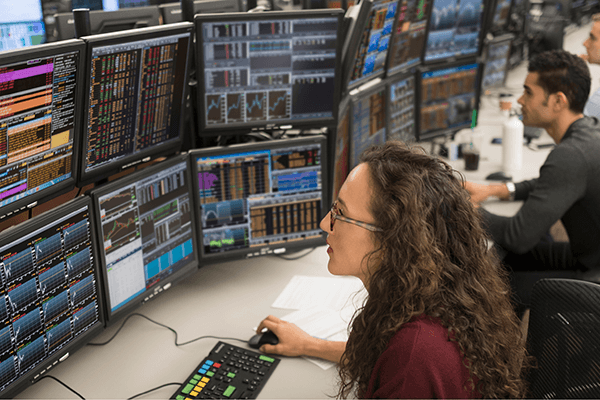
Jumping hurdles or breaking barriers? The challenges of 24-hour trading in US equities markets
This content was originally published in TabbFORUM ‘The markets never…

2025Q1 CCP volumes and share in IRD
This content was originally posted by Clarus. Clarus CCPView has daily volume…

How global markets are adapting to the changes forged by AI and digitalization
Stock trading has seen a massive shift in the past…

SEC gives market participants a reprieve on UST central clearing rules
There was a collective sigh of relief earlier this year…

DTCC’s Match-to-Instruct workflow: Vital for T+1 trade settlement in the US
As global markets move towards shorter settlement cycles, market participants…

Navigating financial transparency: Changes to transaction reporting on the horizon
What market problems are the regulators trying to solve? A…

Overnight ATSs and exchanges drive evolution of extended market hours in US
“24-hour” trading is an ongoing trend in equities markets around…

What’s new in CCP Disclosures – 4Q24?
This content was originally posted by Clarus. Clearinghouses have published…

How can corporates use the ISO project for effective treasury transformation?

This content was originally published by The Treasurer Although ISO…

T+1 settlement dates for UK, EU announced: What can they learn from US and Indian markets?
It is official. The United Kingdom (UK) will move to…

Modern traders are tech-savvy, confident, and independent
The traditional perception of traders is that they’re not tech-savvy,…

Enhancing Implied Volatility modeling: Bridging accuracy and safety with neural networks
Why Implied Volatility matters Options prices depend heavily on implied volatility…

Optimizing Money Market Fund investment processes with your treasury management system

In the fast-paced world of corporate finance, the ability to…

The new face of asset management
The asset management industry has not had an easy time…

Navigating financial transparency: An overview of the UK’s DRR and the EU’s DPE regimes
With the UK’s Designated Reporter Regime (DRR) launched in April…

Market trends in India in 2025

The Indian capital markets are experiencing significant transformations in 2025,…

Exploring the dynamic evolution of electronic trading
The FIX EMEA Trading Conference 2025 always provides an interesting…

The outlook for brokers in India in 2025: The budget and beyond

Volatility has dominated the outlook in global capital markets in…

The rise of retail trading in derivatives: Balancing growth and investor protection

Retail trading in derivatives has surged globally in recent years,…

2024 CCP volumes and share in IRD
This content was originally posted by Clarus. Clarus CCPView has daily volume…

The bumpy road to creating a consolidated tape
The road to a consolidated tape (CT) for equities in…

Tech investment: a must for emerging derivatives exchanges?

Investing in technology is essential across the financial services industry.…

How AI is shaping asset management
Artificial intelligence (AI) is revolutionizing the asset management sector, driving…

How electronification has accelerated in the US credit markets

This content was originally published in TabbFORUM Electronic trading in credit…

What’s new in CCP Disclosures – 3Q24?
This content was originally published by Clarus. Background Under the…

Should firms consider outsourcing collateral management in repo?
Participants in the US Treasuries (UST) market, the largest and…

Decay curve: Detecting toxic behaviors in FX trading
In the fast-paced, complex world of FX trading, tools maintaining…

The importance of addressing payment fraud

Payment fraud is one of the most pressing issues facing…

Top trends shaping asset management in 2025
The asset management industry is a dynamic ecosystem constantly reshaped…

Visualization adds value to client order workflows
Capital market participants work with huge volumes of data every…

Lowering the cost of capital

Accurately assessing and controlling the cost of capital is crucial…

Crypto derivatives – A comprehensive guide
Introduction to crypto derivatives Crypto derivatives are financial contracts whose…

Building up further capabilities: What lies in store for e-FX in 2025
This content was originally published by e-Forex.net. Vivek Shankar spoke…

The changing face of ESG: How sustainable investing will survive Trump’s second term
This content was originally published by BusinessGreen The debate around…

Multi-venue conditional orders are a key tool for brokers
Orders with conditional terms offer buy-side investment firms greater control…

Asset management – a comprehensive guide
Asset management is the strategic handling of a client’s money…

Navigating a new era of risk management: why energy firms must adapt at pace


[This content was originally published by TabbFORUM.] In recent years,…

0DTE options surge: Why investors are betting big on same-day expiries
As 2024 came to a close, industry experts were out…

Investing in a bank account and bank fee management tool brings immediate ROI

In today’s fast-paced and competitive business environment, corporations continually seek…

Asia family offices: Appetite for PE increases, but regional GPs are left wanting

This content was originally published by ION Analytics. The first…

Hedge accounting – latest trends, issues, and ION capabilities

International accounting standards evolve continually due to changes in market…

The green shoots of sustainable repo are visible, but the market needs clarity to grow further
Sustainability and the environment are often front and center of…

For brokers, capital markets technology is key to delivering a global service
In the current capital markets landscape, buy-side customers seek seamless…

Mastering municipal bond trading
Municipal bonds have become increasingly popular as an investment option…

24-hour stock trading: Exploring the future of round-the-clock equities markets
Equities markets are beginning to grapple with the idea of…

Lifting the veil on margins
Ever since the global financial crisis (GFC), margin transparency has…

How SWIFT gpi has transformed cross-border payments

In the fast-paced world of financial markets, especially foreign exchange…

Why tokenized funds are gaining momentum
Tokenized funds accumulated over USD 2 billion in assets under…

The dynamic risk management model in hedge accounting
Dynamic risk management (DRM) is a new proposed model for…

CME proposes its UST clearing approach
Introduction Following its March declaration of intent, CME in October…

Harmonizing financial product identifiers: Streamlining global regulatory reporting

In today’s complex financial markets, harmonizing product identifiers – like…

Why asset managers turn to asset servicers
Asset managers are facing increasing complexity as clients and regulators…

Streamline your trading: The power of composite orders in modern markets
Compositing is a crucial order management tool for sell-side brokers.…

Unwinding yen carry trade highlights need for tech-led risk mitigation

The sudden volatility of the yen in 2024, after years…

2024: A year of change in global capital markets
The global capital markets have seen rapid changes and significant…

Putting the pieces together to create a more efficient derivatives industry
Efficiency and automation are long-running themes in the derivatives world.…

What’s behind the growth of equities swaps?
Equity swaps trading has grown in popularity due to various…

How and why asset managers are investing more on data
Choosing the right data has long been a crucial factor…
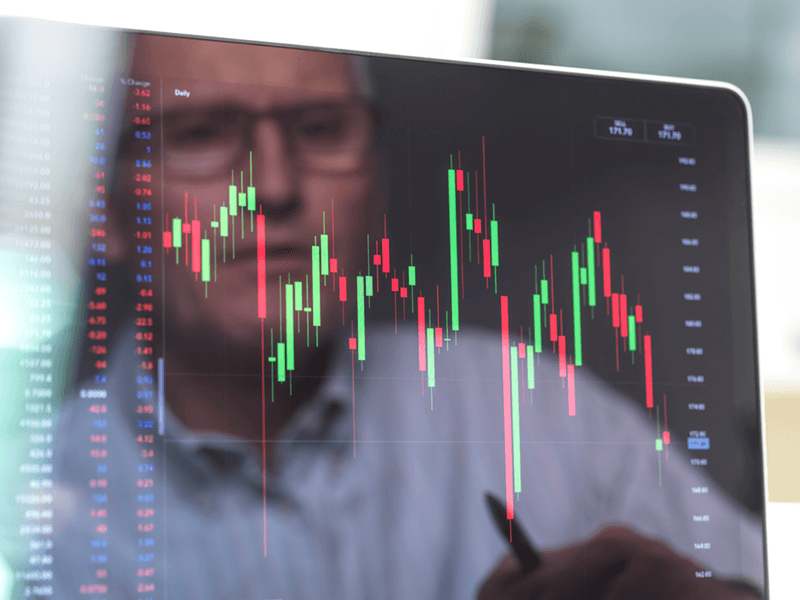
Retail traders’ expectations shape brokers’ requirements
The rise of retail trading is one of the key…

DORA: Strengthening operational resilience in the digital age
The clock is ticking with only a little over a…

US regional banks need to up their digital game
Regional banks have not had an easy time of it.…

What asset managers demand of index providers in evolving investment landscape
The investment landscape is fast evolving, driven by artificial intelligence…

Responding to cyber threats with secure sign-on and authentication

In today’s digital landscape, cyber security is more important than…

A guide to collateral management
What is collateral management? Although post-financial crisis regulation was targeted…

The rise of electronification in US credit markets
Credit markets have long played catch-up with their equity counterparts…

Europe is slowly catching on to the fractional share trading revolution
Fractional share trading has become central to equities investing, particularly…

How to optimize the derivatives market structure in Europe
The European Union (EU) must unite its capital markets or…

Explosive India IPO scene attracts more issuers
This content was originally published by ION Analytics. India has grown…

Cryptocurrency accounting in 2024

The Financial Accounting Standards Board (FASB) recently issued a significant…

Neo-brokers are shaping the future of retail investing
The modern equities brokerage landscape is increasingly diverse and specialized,…

ION’s Marco Frangi discusses machine learning in financial trade surveillance

In a recent episode of the Markets ConversatION podcast, Marco…

FX looks to exploit the scalability benefits of cloud computing

This content was originally published by e-Forex.net. Institutional FX has always…

A comprehensive guide to securities lending
What is securities lending? Securities lending is a crucial practice…

ION’s Sandeep Sabnani and DSP’s Anil Ghelani discuss the rise of ETFs in India
The rise of passive investment strategies, and Exchange-Traded Funds (ETFs)…

What you need to know about pre-hedging in swaps markets

The FICC Markets Standard Board, known as the FMSB, recently…

The current European regulatory horizon: MiFID, DORA, and developing AI rules
At ION Markets, we are constantly scanning the regulatory horizon…

A look at the role RTGS plays in payments
Real-Time Gross Settlement (RTGS) is often described as a game…

Can US buyside firms eliminate UST repo cleared margin for some trades?
As covered in our recent blog, the DTCC’s recent FICC…

How asset managers can safely ride the private markets wave
Over the past decade, the investment landscape has undergone a…

How ETFs have spread into fixed-income markets

Markets have evolved greatly in the past decade, with geopolitical…

US crypto legislation could bring clarity and derivatives boost
US lawmakers hope to establish a regulatory framework by the…

FX Futures are increasingly relevant in eFX technology stacks

FX futures were first introduced on the International Monetary Market…

Mastering repo trading: strategies, benefits, and market dynamics
What repo is and the role it plays The repurchase…

Taking stock of active ETFs
The ETF industry has transformed over the past three decades,…

Equities – a comprehensive guide to trading
Introduction to equity trading Equity trading is a vital feature…

ION’s Chris Barnes looks back at early August’s market jitters: Just how bad were trading conditions?
In a recent ION Markets ConversatION podcast, Chris Barnes, product…

PE and ESG reporting: GPs juggle costs to shoulder mounting responsibilities
This content was originally published by ION Analytics. Advent Partners is arguably…

How securities lending and borrowing can boost EU capital markets
The European Commission’s (EC) efforts to establish a Capital Markets…

Efficiency in FX is a must-have as volatility stirs and rule changes flow
The move by the US, Canada, and Mexico to a…

Digital bonds are slowly gaining momentum in a complex landscape
In the past few years, major financial institutions have begun…

Where are the growth opportunities in derivatives?
In today’s financial landscape, volatility and uncertainty are never far…

How securities lending and repo are converging
Securities lending and repo transactions may have distinctive characteristics, but…

The outsourced chief investment officer model comes into its own
Outsourcing is not a new concept in asset owner circles.…

ION’s Eugene Markman and CME Group’s Paul Houston discuss platform migration, market fragmentation and innovation in FX
ION executive Eugene Markman recently appeared on The Markets ConversatION…

ION’s Bruce Roberts says new derivatives platforms must be tech-savvy, seamless, and scalable to succeed
ION executive Bruce Roberts and Stephen Bruel from Coalition Greenwich…

Repo set to soar as tokenization unlocks collateral worth trillions
Trading repos through distributed ledger platforms is already worth billions…

Can active asset management show its worth in volatile times?
The asset management industry has faced numerous challenges recently, impacting…

Could generative AI be the final disruptor in derivatives?
Generative artificial intelligence (genAI) has been dubbed the most significant…

Examining the importance of execution quality for corporate FX trading desks
Multinational corporations conduct numerous foreign exchange (FX) transactions daily. For…

The rise of fully paid securities lending opens new opportunities for brokers and retail investors
Retail investors usually earn returns through dividends and capital appreciation…

North American Asset Management Trendspotter: Deal volume hits near four-year high
This content was originally published by ION Analytics. North American…

The time is right for credit futures
Credit futures, which allow investors to hedge against or speculate…

FX traders looking for a fix in the new T+1 settlement era

As with many new regulations, there are the unintended consequences.…

DTCC clearing mandate survey shows fourfold GSD margin increases
In July, DTCC published “The U.S. Treasury Clearing Mandate: An…

Technology is key to managing the complexity of global short selling
Short selling is a widespread trading strategy and a key…

Best execution and technology matter for brokers, but so do relationships
Fintech dominates the story of best execution in today’s markets,…

Analyzing the growth of outsourced trading
More than nine out of 10 (91%) fund managers expect…

Taking Canada’s repo market and collateral management to the next level
Despite having well-established and functioning financial markets, Canada falls short…

How AI impacts the FX market
Automation has played a game-changing role in foreign exchange trading…

Optimizing FX risk management: From strategy to seamless execution

Effective foreign exchange (FX) risk management requires tailored strategies for…

Can a new US futures exchange upend the market?
FMX Futures Exchange, a new platform from BGC Group, hopes…

DeepMargin: approximating the SPAN 2 algorithm using neural networks
An exchange is a regulated market where individuals and companies…

How are brokers and technology vendors responding to commoditization in capital markets?
Commoditization, the process by which specialized and bespoke products and…

ION’s Edoardo Pacenti says technology adoption key to improving execution
Buy-side needs more adoption of automation tools to reduce risk …

Abu Dhabi joins Dubai in race to lure asset managers
This content was originally published by ION Analytics. Dubai has…

Why firms must consider dynamic risk management
The world’s largest banks have long been up in arms…

PE fund administration: Slowdown leads to more outsourcing as GPs trim fat
Exit markets have seized up globally, prompting private equity firms…

Virtual account management – visibility, control, and efficiency

What is a virtual account? Why do banks offer them…

AI is revolutionizing algo trading but markets must remain vigilant
Algorithmic trading uses computer programs to execute trades more efficiently…

Yen carry trade volatility a reminder that trusted technology and partnerships matter
In early August 2024, the Japanese markets experienced a major…

DLT can play a key role in collateral management but wider adoption is still far off
Distributed ledger technology (DLT) and smart contracts have gained prominence…

The importance of robust Counterparty Credit Risk management for energy and commodities businesses

In energy and commodity trading, managing risks is paramount. Among…

What will be left of uncleared UST repo after SEC mandate go-live?
Our recent blogs on mandate scope, FICC access methods and…

The rising demand for commodity hedging: Navigating energy and commodity market volatility in 2024
In today’s highly unpredictable global landscape, commodities markets face unprecedented…

Fixed income trading on the cusp of change as EMS technology evolves
Fixed-income trading has historically lagged behind other financial markets in…

Exploring the MiCA regulation and its impact on asset managers
The rise of crypto assets has impacted the financial landscape,…

Bridging the Gap: How trading software UX/UI can catch up to the smartphone

Three decades ago, financial services software stood at the forefront…

Improving cash visibility with bank statement reporting

What is bank statement reporting? Bank statement reporting is the…

Managing developments in Canadian market structure

Canada is a major global capital market, making up 2.7%…

Catching up with the front office: The evolution of post-trade functions
The front office has always been seen as the more…

New US IG issuers tantalize convertible bond market as volumes rise
Investment-grade companies are becoming a driving force behind a new…

Using a local volatility model for the evaluation of TARF FX options
We wrote last week that Target Redemption Forwards (or TARFs)…

Shining a light on triparty repo
Over the last decade, triparty assets have more than doubled…

Fluctuating retail volumes pose a challenge for brokers
Retail trading has been on a steady upward trajectory for…

Handling the complexities of TARF FX options
Target Redemption Forward (TARF) contracts are complex financial instruments used…

After a smooth migration to T+1, what does the road ahead look like?
Major North American Markets (US, Canada, and Mexico) transitioned to…

New initiatives striving to boost securities finance in the Gulf
Bond issuance in the Gulf countries (GCC) has grown significantly…

From allocations to average pricing: Getting the complete picture of the trade lifecycle
Electronic trading has been a welcome development with traders across…

Momentum builds for African repo market
Emerging markets have come back into the investment fold over…

Asset managers and the evolving UK regulatory landscape
This content was originally published by IBS Intelligence, June 2024…

A helping hand in financial markets’ trade surveillance
Compliance is a top priority for financial markets’ participants, especially…

Is there a case for a consolidated tape in the EU and UK?
The financial landscape of Europe is undergoing a transformation. Following…

Investing in front-office ops is crucial for FCMs to keep market share
Future Commission Merchants (FCMs) are used to markets being in…

European venues and brokers seek to capitalize on the growing retail trading space
Stakeholders from across the industry are keen to encourage the…

Finding an execution platform Plan B in securities finance
Relying on a single execution platform provider for securities finance…

The scramble to adopt ISO 20022 in international payments

The payments industry is transforming! It is shifting to ISO…

Examining the rise of new derivatives exchanges
Capital markets are more versatile, interconnected and complex than ever.…

UK has opportunity to reinvigorate LSE IPOs following FCA reforms – experts – Analysis
The Financial Conduct Authority’s (FCA) unveiling of its long-awaited listing reform has…

Bilateral repo in the spotlight as new rule intensifies scrutiny
It has been a long time coming but earlier this…

ION AM’s Steven Strange discusses tackling regulatory compliance for NBFIs
Steven Strange, ION Group’s head of product for asset management,…

The evolution of F&O clearing workflows: Let’s talk allocation!



The importance of allocations in the trading lifecycle of exchange-traded…

SOFR options – How healthy is the market?
This content was originally published by Chris Barnes on clarusft.com.…

FX ECNs: Inspiring the market with innovative new trading products and services
Increased market volatility and the adoption of new, algorithmically-driven, multi-asset…

On-premise or SaaS? The decision asset managers must make for effective compliance
One of the biggest investment decisions asset managers make is…

Automated trading systems offer benefits across the whole lifecycle
Automated trading and algorithms do the heavy lifting on trading…
Market disruptions cause energy firms to seek advanced analytics, modelling and risk management capabilities

Geopolitical unrest and global economic uncertainty have caused multiple disruptions…

APIs: The driving force behind innovation and growth in FX trading
The FX market has witnessed a substantial increase in the…

Raising asset management standards with the Consumer Duty
The Financial Conduct Authority (FCA) introduced the Consumer Duty in…

FX trading is advancing towards front-to-back ecosystems

FX is the envy of other asset classes with its…

Self-provisioning is a key competitive advantage for buy-side algo providers
Buy-side investment firms have increasingly demanding requirements for control and…

What, why, and how of treasury regulatory compliance and reporting
Compliance might not always be top of mind in large…

Getting to grips with the complexities of compliance in Asia
Asia is jurisdictionally heterogeneous, and when it comes to keeping…

ION FX’s Eugene Markman discusses the challenges and opportunities of data and AI
ION executive Eugene Markman and Colin Lambert from The Full…

Transforming securities finance through technology
The first intraday repo transaction on a distributed ledger technology…

A Closer Look at the Cross-Currency Basis

Market data comes from a market data provider. Well, usually.…

Regulation matters: What are regulators focusing on around the globe?
For financial firms to manage the complex global regulatory environment…

European asset managers buckle up for a bumpy compliance ride
Asset management in Europe, like in North America and Asia,…

Gauging the upside of straight-through processing in FX

Financial markets, which are more integrated and complex than ever,…

Treasury real time cash visibility
What is treasury cash visibility? Cash visibility refers to the…

The path to NBFI rules in the US will likely be long
It has been a long seven years, but as the…

How peer-to-peer lending can address market needs in repo
After a prolonged period of negative interest rates, repurchase agreements…

Assessing the financial impact of UST repo clearing on banks
Our recent post on FICC access methods noted that sponsored…

nuam: How to prepare for LATAM’s great exchange integration

Efforts to integrate the capital markets of Colombia, Peru and…

Why your organization benefits from artificial intelligence and machine learning


The recent introduction of ChatGPT and similar artificial intelligence (AI)…

Improving transparency in machine learning models for market abuse detection


The need for interpretable models In the previous post, we…

Boost efficiency with treasury management system
A treasury management system (TMS) is specialized software crafted to…

T+1 settlement has arrived! How we got here, adapting to new realities
After much anticipation, and not a little global concern, the…

Repo market ponders its future as Europe plots tricky path to T+1
As markets digest the shorter settlement cycle (T+1) introduced in…

Shaping private markets in 2024: Returns, risk and regulation
After a strenuous 2023, the new year has brought a…

Keeping repo markets relevant through deeper liquidity and diversification
Having access to deep pools of liquidity and a diverse…

The benefits of OMS and FIX protocol for buy-side traders

Efficiency has always been a buzzword in the derivatives industry.…

Walking the tightrope of increasing regulatory data collection initiatives

In a digital world where the volume, velocity, and granularity…

US Treasury clearing access methods at fixed income clearing corporation (FICC)
The Fixed Income Clearing Corporation (FICC), a DTCC subsidiary, has…

How the rise in passive investing in India drives sell-side automation

India has been at the forefront of the global rise…

Will Japan’s new interest rate trajectory change repo dynamics?
On the surface, the Bank of Japan’s raising of its…

How interoperability can drive asset tokenization across private markets
In the past few years, conversations around the adoption…

How ML can improve alarms classification to detect market abuse
A crucial balance in financial regulation In the financial sector,…

Research re-bundling: Transparency and challenges in investment research
The financial industry relies heavily on research to make informed…

The strategic edge of multi-asset trading in a volatile world
Multi-asset investing is not a new concept, but it has…

Today’s CFO: the tech fueled evolution of financial leadership

The challenges of the pandemic and fragile global supply chains,…

The next opportunity for tokenization?
This content was originally published by Kenan Maciel of Lab49,…

Regenerative finance vs ESG: The next step for sustainable investing?
The financial world is undergoing a significant shift, with a…

Stepping into the trading future with Order Management Systems
Teleporting from outdated legacy systems on trading desks with modern…

RegTech: A disruptive force that’s helping to streamline and automate FX compliance operations
The global, decentralized, 24-hour trading cycle of the FX market…

European ESG laggards will suffer from decreasing access to capital – analysis


European companies that fail to take emergent environmental, social and…

Asset tokenization: the next revolution in securities?
BlackRock, the world’s biggest asset manager, in March took a…

The benefits of deploying API solutions in FX trading
Foreign exchange traders have a wealth of technology options at…

Strategic insights into efficient bank relationship management
In the wake of increased scrutiny of corporate finances, there…

Nickel: How 2023 trends will shape 2024
The demand for nickel — all over the world —…

Algo trading in India surges but still has room to grow
Algorithmic trading increasingly dominates stock markets, with around 80% of…

Regulating the Transformative Power of AI in Asset Management
Artificial intelligence (AI) is rapidly transforming our world, impacting everything…

Mastering treasury risk management: strategies and solutions
When disruptions threaten the status quo, treasury management becomes an…

Unlocking FX swaps: The migration to electronic channels gathers pace
NOTE: This article was originally published on e-Forex.net by Vivek…

Assessing the impact of electronification on sell-side markets

Markets have changed greatly over the past two decades, and…

The pressing case for workflow automation in fixed income
Workflow automation is not a new theme in the fixed…

How NBFIs can prepare for closer regulatory oversight
Non-bank financial intermediaries (NBFIs), colloquially referred to as “shadow banks”,…

UK Crypto Regulation: From Caution to Confidence
The UK’s approach to digital asset regulation has been characterized…

Implementing digital workflows: balancing innovation and compliance in capital markets
ION Group’s head of fixed income product development, Tommaso di…

Food for thought: ION Fidessa’s Regulation for Breakfast focused on the new FCA regulations
Recently, we welcomed colleagues from across the capital markets to…

Navigating the New Frontier: Regulating Crypto and Digital Assets
The explosive emergence of digital assets has reshaped the financial…

Retail brokers in Europe poised to expand derivatives as regulatory challenges mount
Changes are afoot in the derivatives industry as retail brokers…

Commodity Management Solutions: Beyond traditional CTRMs/ETRMs

Why traditional CTRM/ETRM is no longer enough Commodities are the…

SEC clearing mandate for US Treasury Securities

This article is written by a guest author. In the…

The art of effective cash flow management
Effective cash management is crucial for any business. It is…

Capitalizing on the cloud in a fast-changing FX market

Foreign exchange is the largest financial market in the world,…

India’s ambitious move to same-day settlement and beyond
Confidence is high, and Indian authorities are in no rush…

The rise and future of credit portfolio trading
It’s a credit strategy that was off the radar several…

As connectivity gets more complex, new approaches are needed

The electronic trading landscape has undergone rapid transformation in recent…

Deciphering the meteoric rise of India’s capital markets
India is on the move and it’s moving fast. That’s…

Active Accounts at EU-based CCPs
Note: This article was originally published on the Clarus Blog…

ASC 815 portfolio layer method: Unveiling its functionality, benefits, and considerations
FASB ASC 815 guides entities on accounting for derivatives and…

Derivatives in 2024: Tech investment critical to competitiveness amid regulatory headwinds
Know your acronyms! This year promises to be full of…

What is the UK regulatory framework?
UK financial regulation is undergoing its most significant overhaul since…

2024: How technology is revolutionizing the securities finance industry
APIs, artificial intelligence, DLT, data harmonization, Cloud and smart contracts;…

Managing the nuances of securities finance in Asia
Securities finance in Asia is as diverse and complex as…

Navigating the road to net zero: Carbon offsets as a key strategy
Introduction As corporate net zero pledges surge, many companies are…

Are you trading securities? – Global impact in 2024 through SEC’s T+1 settlement change is coming

The world of finance is constantly evolving and requires efficiency.…

T+1 and FX: The opportunities and challenges of a shorter settlement cycle
28 May 2024 is set to be a pivotal moment…

Swaps Compression: What is it and why is it important?
This article is written by a guest author. Swaps Compression…

Understanding treasury management: a comprehensive guide
The basics of treasury management Treasury management is vital for…

Repo: The heart of the global financial system and why the SEC took action
The US Securities and Exchange Commission (SEC) on 13 December…

Regulation matters: the near horizon for Europe in 2024
New EU transparency-related changes applied from 1 January 2024. To comply,…

Next generation FX analytics: Bringing transparency and more to the FX execution process
NOTE: This article was originally published on e-Forex.net by Vivek…

Achieving and maintaining an ultra-low latency FX trading infrastructure
NOTE: This article was originally published on e-Forex.net by Paul…

Migration to ISO 20022: the journey to more efficient cross-border trading

NOTE: This article was originally published on IBS Intelligence. Navigating…

FX trading risk management: Harnessing the benefits of Digital Transformation
NOTE: This article was originally published on e-Forex.net by Vivek…

Pathways to success: What steps are being taken to further optimise FX Post Trade Services?
NOTE: This article was originally published on e-Forex.net by Vivek…

How FX businesses can use data to boost customer loyalty and profitability
Digital transformation in the FX industry has changed how customers…

Tackling the shift to renewable energy trading
Note: This article was originally published in New Energy World.…

How CTRMs are revolutionizing commodities trading
Note: This content was originally published by TabbFORUM. Commodity Trading…

How an EMS helps firms navigate a fragmented fixed income market
Fragmentation in fixed income is nothing new. However, the situation…

Navigating Treasury Management System implementation: Key considerations for corporate treasury teams


Implementing a TMS is a significant undertaking for any corporate…

Augmenting cash flow forecasting with machine learning
Cash forecasting is a challenging discipline. Depending on the organization,…

Safeguard and maximize your bottom line by using a CMS along with your ERP for raw material procurement

Raw material procurement is a fundamental aspect of the supply…

FX market trends: Liquidity, execution, and the FX Global Code
In the ever-evolving world of foreign exchange (FX) trading, market…

The changing landscape of electronic trading in the APAC region
Electronic trading is on the rise in markets across the…

SEC Proposal to Mandate Climate Risk Disclosures
Sustainability is a contentious topic in the US, and the…

Upcoming changes in the Japanese equities markets
The Japan Exchange Group (JPX) has announced a range of…

Central Clearing of US Treasuries
U.S. Treasuries are one of the most liquid asset classes…

Major shifts in Middle East energy and commodity markets and how the right technology can fuel your growth potential
The Middle East’s energy and commodity markets are pivotal in…

Consolidated Audit Trail: Preparing for the next phase of regulation
The Consolidated Audit Trail (CAT) has been a major focus…

Hong Kong’s new dual counter listings model: Challenges and opportunities for brokers
In June 2023, the HKEX launched its new dual counter…

Algorithmic trading – monitoring and management
The rationale for algorithmic trading has always been to reduce…

Is the reduction in Futures Commission Merchants (FCMs) about to reverse?
In the decade leading up to March 2020, the dual…

The new features of Fidessa Spotlight in two minutes
One of the initiatives we’re most excited about this year…

How central banks can mitigate operational risk

Originally published on openlink.com in 2018. Updated August 2023. While…

Preparing for upcoming UK regulatory changes
For more on the latest regulatory developments from the UK…

How large are Cleared Swap markets?
In today’s article I am going to look into the…

The road to desktop interoperability
Desktop interoperability is a longstanding concern for capital markets firms.…

Why corporates must consider cash flow at risk (CFaR)
In today’s dynamic business environment, corporates must prioritize financial risk…

Risk management solutions: ERP vs. ETRM
In the volatile world of energy, companies face multiple challenges…

Why should large corporates consider in-house banking?
Large companies are always looking to improve their asset management…

Rapid response: Energy firms count benefits of algorithmic trading
Shifts in the world’s energy economy have created a substantial…

Demystifying CVA, CECL, and ECL: Understanding accounting for expected credit loss
The concept of market value attributed to the counterparty credit…

Renewable energy trading: How operations must accommodate increased supply intermittency
The increasing adoption of intermittent renewable energy sources like wind…

Turning treasury into a profit center
In modern times, technology has proven itself the enabler for…

How IFRS 9 can impact your financial reporting
The IFRS 9 standard adoption became effective on 01 January…

Trading solutions for the Indian capital markets: The current landscape
The Indian capital markets are experiencing a period of rapid…

From risk to reward: Managing FX risks efficiently

Foreign exchange (FX) risks can be a nightmare for global…

ION comes together to innovate at the annual technology competition in India

Developing and employing modern technology is at the heart of…

Pricing credit risk with cutting-edge precision
Challenging conditions on financial and labor markets, affect both corporates…

How can trading platforms support hybrid working?
The COVID-19 pandemic transformed millions of people into home workers…

The MiFID II Review – the Market Model Typology (MMT) post-trade data standard
For more on the MiFID II Review, see part one…

India introduces T+1 trade settlement
On 27 January 2023, the Securities and Exchange Board of…

Are you equipped for reoccurring commodity market disruptions?
Disruptions are happening with increasing frequency in today’s commodity markets.…

The MiFID II Review is on the horizon
In Europe, the second Markets in Financial Instruments Directive and…

How to approach disruptions in commodity supply chains
Introduction For the past few decades, there has been a…

3 steps to efficient FX exposure netting
FX risks are hedged in one way or the other…

The India equities market in two minutes
The Indian capital markets are dynamic, diverse, and increasingly innovative.…

Bank relationships: How to prepare for an annual bank meeting
Building a good customer-bank-relationship In addition to working closely with…

10 fundamental questions every Risk Manager should review regularly
As a Risk Manager, one of your primary responsibilities is…

Top 3 reasons to start using a TMS now

Managing financial risk is critical to any business, especially in…

The rise of regional brokers in APAC presents challenges and opportunities
The ongoing process of economic development and integration in South-East…

How commodity businesses can benefit from artificial intelligence and machine learning
To navigate today’s evolving and volatile commodity markets, businesses need…

Payment hub: Simplify payment complexities
Company growth, new company acquisitions, and expansion into new regions…

Treasury nightmares: cash forecasting with spreadsheets
Picture this: your CFO needs a cash forecast for next…

The changing status of dark pools in the European equities landscape
Dark venues have been a significant part of the European…

Treasury automation: The next level of treasury reporting
Treasury management systems (TMS) standardize and automate cash, payments, treasury,…

The relationship of regulation with automation and technology
With advances in automated trading in recent years, regulators have…

XTP Spark: Back-office automation for trading businesses of any size
Life is complicated. Automation can make it simpler. At ION,…

ISO 20022 messaging: FAQs answered by the ION Treasury experts
This article was updated on 31 October 2022. This article…

Automation: What’s next and how will it alter the role of business leaders?

Note: This content was originally published by the FT Future…

TMS and ERP systems: How new technologies improve the system integration
An Enterprise Resource Planning system (ERP) helps manage a company’s…

Market volatility casts spotlight on realtime risk analytics

NOTE: This article was originally published on GlobalInvestorGroup.com by Radi…

Workflow automation through algo wheels – counting the costs?
The demands and expectations of buy-side firms are constantly driving…

ISO 20022: How the new standard impacts financial institutions, corporates, and technology providers
Financial institutions across the globe have started their journey to…

Is today’s commodity market equipped for the pressures of energy transition?
In recent weeks, major financial firms have announced investments in…

Cloud treasury management solutions on the rise

Treasury teams use technology to control the financial operations across…

New Scales of Change: Addressing the Challenges of Today’s Commodity Markets

Commodity markets are remarkably diverse. While financial commodities share many…

What are APIs and how can treasury use them?
There is a lot of discussion and interest around APIs.…

The EU’s securities markets regulator prioritizes flagging of non-price forming trades
Following an earlier consultation, ESMA published its final report on…

Integrating your treasury system and MMF portal

Money Market Funds (MMFs) are popular short-term investments. As trade…

Open banking: quo vadis?
Open banking initiatives were started around the world to increase…

The ION Desktop Interoperability Framework

ION introduces an open protocol, a desktop-side bus and a…

Cash forecasting: faster and more accurate through treasury technology

Cash forecasting is essential. Everybody has to do it. For…

Software and industry evolution
Computer scientists have always tried to implement techniques to extend…

Payment fraud: How machine learning can help protect your company
Around 47% of companies have been a victim of payment…

Treasury technology: Why a modern user interface matters

Let’s say it’s your first time accessing the new Treasury…

Key factors to consider when choosing your TMS
Undeniably, the treasury function of any business is vital. Corporates…

How technology helps automate FX risk management
In the last 18 months, the COVID-19 pandemic has underscored…

Catching up on events – 40 years of the ISIN
The 1980s brought us the first space shuttle, personal computers,…

10 ways an inaccurate cash forecast can hurt your business
Treasury is becoming a more integral part of the strategic…

Innovation at scale
Today, any global enterprise needs to innovate at speed. This…

Why you should stop running your treasury on spreadsheets

Why you should stop running your treasury on spreadsheets Many…

FIX Connect technology of the future

The world of electronic trading has been changing rapidly over…

Elevate your FX business
The relevance of digital transformation Introduction The FX and cross-border…

Thoughts from the STA Market Structure conference 2021
We were among the many in-person participants at the Securities…

Trading algorithms of the future
As algorithmic trading has evolved over the years, both AI…

Webinar wrap-up: Why UPS implemented a SaaS TMS
More businesses are choosing cloud for their treasury and risk…

Differentiate, commoditize, and harmonize

Repo traders vying to make the most of the industry’s…

A cost-effective way to adopt Test Automation

Testing automation has become a fundamental step of the software…

Business Process Analysis – an ION perspective


A business process is a set of activities performed by…
From Accountant to Treasurer: Where does treasury begin?
By definition, treasury involves the management of money and financial…

Dark trading restrictions set to remain on the regulators’ watch lists
The UK Treasury’s Wholesale Markets Review consultation paper devotes some attention to…

How do you manage non-functional requirements?

If you are in the software industry, you’re already familiar…

Automation of existing software platforms: Part 3
Customization of existing trading platforms is a vital process within…

MiFID II review stores up more compliance costs
As part of the ongoing wider review of MiFID II,…

Optimizing FX STP through intelligent automation
Today’s digital and data-driven economy has placed an ever-increasing range…

How rising interest rates change corporate borrowing
The yield on 10-year US Treasury bonds rose from 0.9%…

UK regulators hit the reset button
As the UK gets ready to hit the reset button…

Real-Time Database Technology you can bank on

Advances in Real-time Database technology are driving faster order throughput…

Display Order Facility in US Equity Markets
Efficient price discovery is essential to the smooth functioning of…

How Machine Learning improves cash forecasting
COVID-19 has led to great uncertainty. Creating accurate cashflow forecasts…

IBOR reform: facts, dates, implications, and how ION can help
Interbank Offered Rates (IBOR) were published daily for multiple currencies…

4 ways a treasury management system can help better navigate COVID-19

Imagine living through the COVID-19 pandemic without technology. You wouldn’t…

Scalable data caching requires scalable querying – here’s how to achieve it


Modern fintech applications have to process enormous volumes of data.…

Automation of existing software platforms – part 2
Evolving the capability of existing trading platforms is a vital…

GTP Stitching

Effective and accurate order management is fundamental to robust trading.…

Successful consolidated audit trail Phase 2c go live
On April 26, ION Markets marked a significant Consolidated Audit…

The structured, the nimble, and the delegator.

A tale of data from the BrokerTec migration to CME.…

Similarities between Apple’s new M1 chip and a trading system design?
I started my new Apple Mac with its new M1…

Low-Touch woes vs Restaurant Wars

The other night, I was rewatching an episode from the…

The easy way to make your trading apps work together as one

Trading is a complex business. In fast-moving, competitive markets, traders…

Back to Front in Cleared Derivatives

Imagine a world where the connections between the front office,…

Regulatory challenges of trading Asian equities and the growth of the Swaps market
When trading equities around the world, most investors understand the…

Should a software house still invest in technology?
I was reading an article on how LinkedIn uses Kafka…
Automating existing software platforms
Adding additional automation within existing order workflow systems is never…

Back to school for MiFID II
The review of MiFID/MiFIR is now well underway following the…

Driving customer excellence

How a business develops its products and delivers its services…

AI: Paving the way towards perfect STP rates
The last decade has seen a remarkable rise in applied…

For those obsessed with quality
Have you said “wow, this is exactly what I wanted”…

All algos are not equal
Algorithms have made their way into our daily lives, from…

Asset management in the cloud: A choice or a transition?
As on-premises solutions have gradually given way to hosted services,…

Correlations hurt your decision-making (not just your portfolio)


Decision-making in contexts that aren’t always easy to predict —such…

Doing a UX re-design for your product

“It is not the strongest of the species that survives,…

The road to SaaS and other myths
Some estimates say that in a few years SaaS will…

The future of trading system display technology
Following my recent article on trading screen design, I had…

Brexit: Liquidity shifts post transition period
After a difficult 12 months, Brexit finally happened. However, the…

Is traditional D2C repo dying?
As D2C repo goes electronic, having the right systems in…

Finding investment opportunities while remaining compliant in a volatile new world
When I meet regulatory and investment compliance officers in the…

Brexit: Cross-border trade publication
Under MiFID post-trade transparency rules, equity trades must be published…

How FX businesses can boost customer loyalty and profitability by using data intelligently
Digital transformation in the FX industry has changed how customers…

Partial settlement: The CSDR effect

Does your secured funding business support partial settlement? Or rather,…

A state of FLUX: How findings led UX helps us create the solutions our users really need

If you had 1 hour to solve a problem, what…

A new asset class comes to town!
We often hear in the press of new trading venues,…

Voice trading after MiFID and COVID: It’s time to stop worrying and embrace digital transformation

Voice trading has undergone major changes as a result of…

There’s no cloud, it’s just somebody else’s PC
Cloud-based applications are great. They free users from hardware, obsolescence,…

The future of web development

The web ecosystem is evolving at an insane speed. Driven…

Here’s why you need to automate your business analytics
Information is different than knowledge. And the more information you…

The benefits of a good order management system during a pandemic
Trading rooms of the world have been shrinking since the…

Brexit: MiFID Share trading obligation – Should the EU investors be worried?
The European Union’s MiFID directives set clear rules on the…

Let’s talk latency
Trading is a highly competitive business where speed is of…

Three display functions that all trading systems should embrace
When trading moved from trading floors and into the digital…

Spanish tax set for January 2021
Before the advent of an EU financial transactions tax (FTT),…

Recurring waves of Brexit
In the face of recurring Brexit waves, the markets have…

Working towards a common goal
Regulators globally are continuing to step up efforts to monitor…

Wider adoption of MMT encouraged
The Securities and Markets Stakeholder Group (SMSG) recently advised ESMA to…

The evolving global impact of MiFID II
Last week, the U.S. Securities and Exchange Commission announced an…

Catch 22: The share trading obligation
MiFID II refined the definition of OTC trading for equities,…

Time runs out on Swiss equivalence
Over the weekend, the stock market equivalence granted to Switzerland…

Blockchain food traceability can revolutionize the industry
Blockchain food traceability is gaining momentum in the global agrifood…

Confronting the challenges of cash flow forecasting
Cash flow forecasting is an essential treasury process. As faster…

Treasury management systems and treasury transformation projects
Since the early 2000s, the rise in the treasurer’s profile…

The importance of energy hedging in a volatile natural gas market
Energy hedging can pay off handsomely for companies. This shouldn’t…